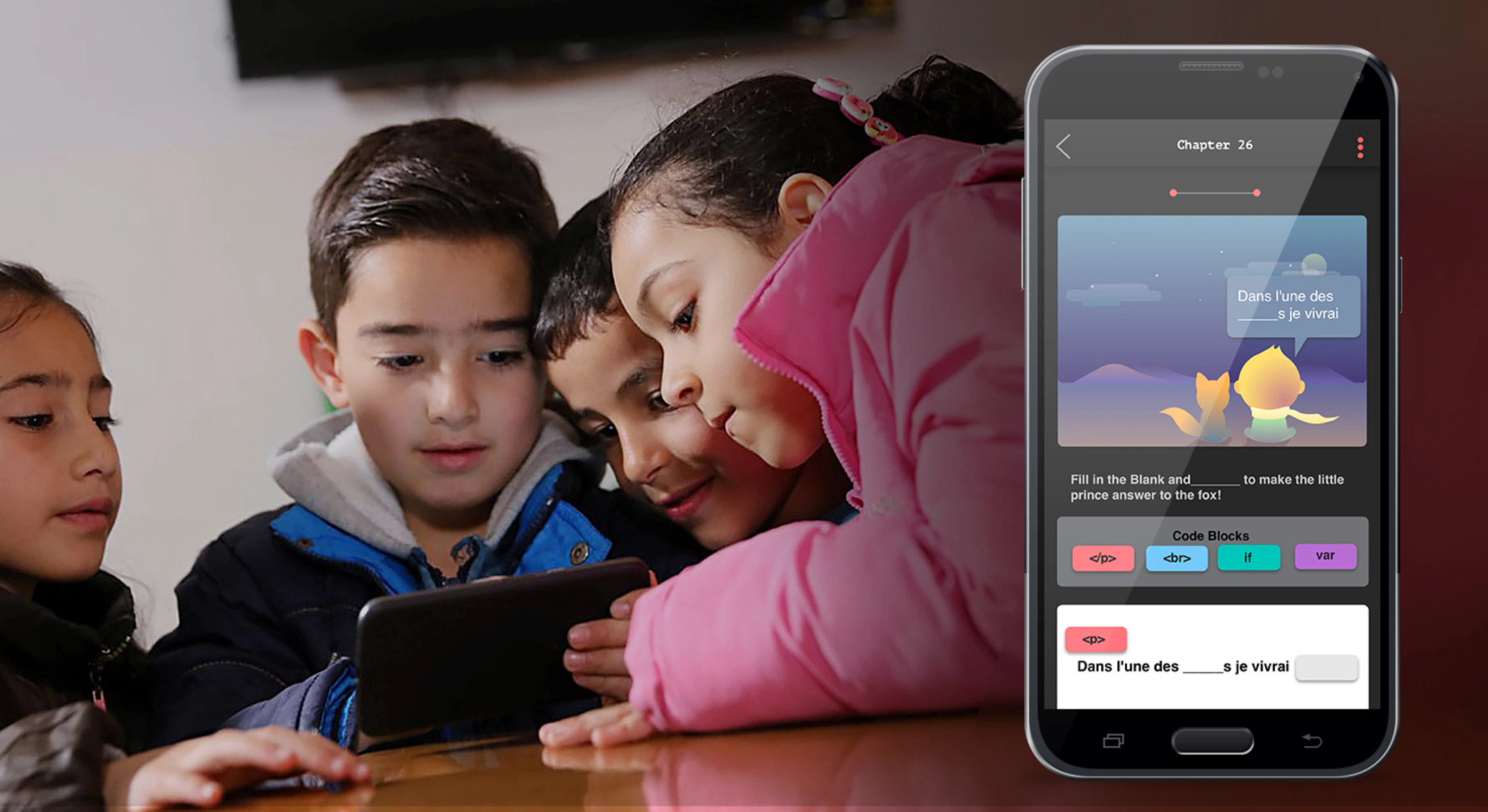
‘Tomorrow’ is a service with the goal of teaching ‘code’ and ‘French’ to refugee children in France using French children's books. After children receive a smart device from a donator, they learn French and code simultaneously using French children's books. Using block coding methods, children can easily make interactive storybooks.
What inspired this project
While I was traveling in Paris, I witnessed the conflict between locals and refugees. There were police at the museums and the Eiffel tower. I thought about whether technology can help to ease the conflicts. After some research, I found out many refugees have difficulty adjusting to French society because of the language. Also, many of them did not have a chance to go to school. Meanwhile, Europe needed more IT experts. I wanted to help refugee children with an app, which they can use to learn French and coding together.
Service Summary
Reality: In France, many refugees can not adjust to society, so social conflicts are prevailing. It creates tension in society.
Problem: Refugee children in France do not have enough educational opportunities, and as they can't speak French, they can't hang out with their peers and feel alienated. In addition to that, they have trauma from the war.
Solution: Refugee children can use French children's books to learn French. It can help them adjust to society. As classic children's books do not have copyright, children can use them for free. With French citizens' help and donations, children can get recorded audiobooks in French and donated cellphones to study. They can enjoy the learning process while they make the book interactive.
Importance: It can contribute to a more harmonious society and the education of refugee children. Also, IT education can contribute to solving Europe's workforce deficiency.
Design
The service has two connected versions: one for French citizens who donate unused devices or record stories, and one for refugee children who learn French and coding through those stories.

Donator
- Donate unused smart devices to refugee children.
- Record a French audiobook for a child to listen to.

Refugee child
- Read a children's book while learning French and coding.
- Unlock and read more interactive books.
- Join learning events created for children.
Reading Page

- Study French through dialogue from the book.
- Learn code with simple block-coding methods.
- Fill in the blank with the correct French word.
- See the Little Prince react, then continue the story.